Primary Health Care for Khmer Children
All Ears Cambodia (AEC) is an NGO whose focus is on the weakest and hardest hit - fighting ear disease and restoring the sense of hearing with hearing aids. Their target groups are some of the poorest, most marginalized in the region. They include street children and former child labourers, women and girls living in precarious situations, children with cranio-facial abnormalities, physically disabled kids, the elderly, internally-displaced communities and victims of leprosy and landmines. They need a helping hand to purchase one piece of equipment for their primary ear care unit - an aural suction unit with accessories which costs £583. Please help this wonderful charity by donating via our “Make a Donation” button.
Typical of the children are the cases of Jorani and Mealea, whose stories are outlined below:
Case Study 1
“Jorani is six years-old and lives in Kampong Chhnang province. She lost most of her hearing when she was just an infant – aged two – following, what is believed to be, administration of aminoglycoside antibiotics. It affected both ears. This chemical trauma to the ear is known as ototoxicity. Jorani was seen at the All Ears Cambodia clinic earlier this year. A medical history was taken, her ears examined and we conducted a number of hearing tests. Although her outer and middle ears were found to be normal, the audiometry tests revealed a severe sensorineural hearing loss affecting both ears. Most of Jorani’s hearing had been destroyed.
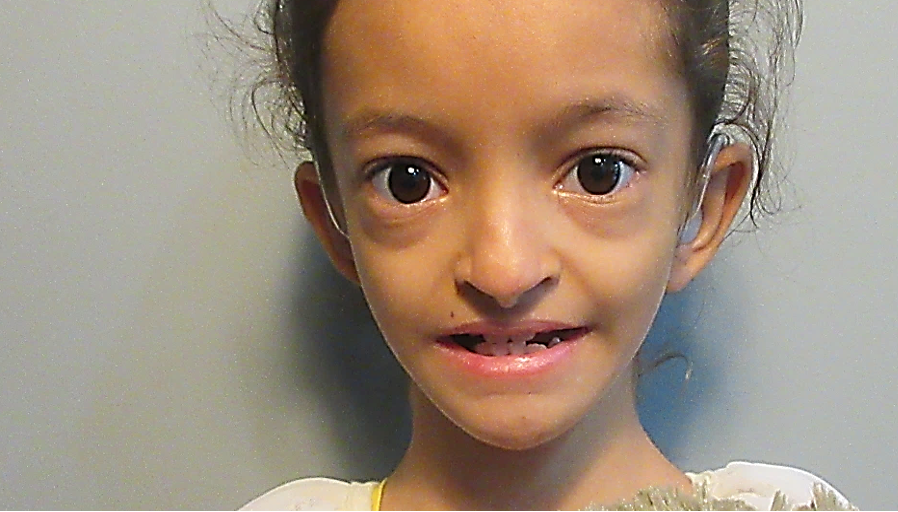
Jorani
In the limited time whilst her hearing was normal, Jorani had begun to learn language and how to speak. This process of learning speech and language, however, had been seriously interrupted. Her enunciation, the capturing of new words and her progress in education had all been significantly affected. So, Jorani was fitted with hearing aids and there was an immediate and very positive difference on switching them on. She was hearing people speaking far more easily than before - without straining to hear. Speech was much clearer and there was no need for her mother to raise her voice for her as she had done before. Within the clinic fitting room, she also became aware of quiet sounds around her that previously she wouldn’t have noticed.
Jorani was recently seen for a routine follow-up appointment. Her mum reported that Jorani hadn't heard her sister (or her grandmother) or friends properly in years. Overjoyed, she remarked that for Jorani to hear clearly again was something she thought she would never experience; something lost forever. She said she was beginning to learn new words and even able to understand simple sentences and was much more interactive with others.
AEC will continue to monitor her progress and give her the on-going support she needs. For now, life and prospects for her are that bit sunnier!”
Case Study 2
“Mealea is four years-old and lives in Takeo province. She has severe sensorineural hearing loss in both ears owing to damage to her inner ears. The loss occurred about five months ago. The reason is not known – what is termed idiopathic. Indeed, idiopathic prelingual hearing loss in children is not an uncommon diagnosis in Cambodia. Medical histories given by parents or families are often quite vague and it’s not always possible to pinpoint a specific cause. The clinician may only be given an account such as the child being ill with a fever and afterwards having problems hearing.
There are a number of communicative diseases of childhood that may actually cause deafness. They include measles, meningitis, mumps, maternal rubella, scarlet fever, whooping cough and influenza. Regardless of cause, treatment options in cases like Mealea are largely limited to wearing hearing aids.
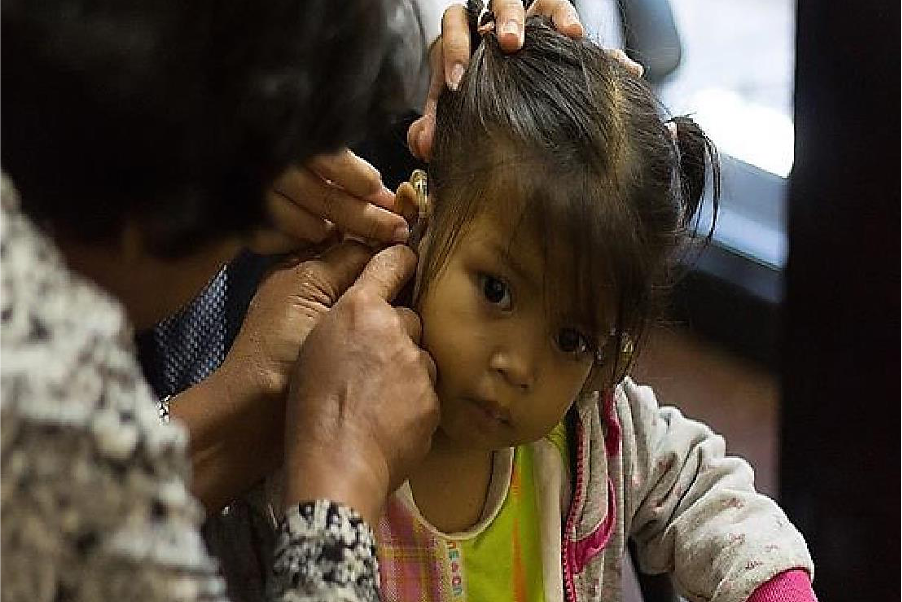
Mealea
So, Mealea was fitted with digital hearing aids just over a week after we first saw her. And she’s doing well. We’ve continued to follow her up, getting more reliable hearing results on each occasion and fine tuning her hearing aids in line with her established levels. And the aim is to maximize her speech intelligibility whilst ensuring that the instruments don’t over amplify loud sounds making them uncomfortable to wear and potentially cause further damage to her ears. Her father reported that Mealea is definitely more responsive to sounds around her and she’s beginning to recognize more words. Our speech advisor is working closely with the family to offer strategies for stimulating speech production in Mealea and how she can learn to listen. “
So, please help us raise the funds necessary to help other children like Jorani and Melea. We only need 25 donations of £20 to reach our target!!
Many thanks.